odp
145 to 168 of 295 locations
-
UIT in IJsselstein I Tourist Info
UIT in IJsselstein I Tourist Info Overtoom 7
3401 BK IJsselstein -
Gagelbos
Gagelbos Gageldijk 104
3566 MJ Utrecht -
Veenendaal Museum
Veenendaal Museum Kees Stipplein 76
3901 TP Veenendaal -
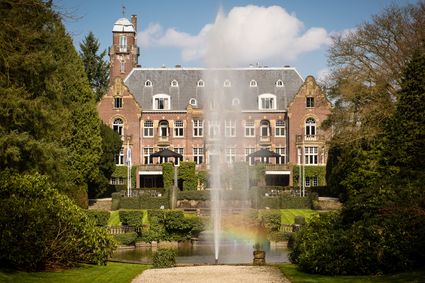
Slot Zeist
Slot Zeist Zinzendorflaan 1
3703 CE Zeist -
City park Griftpark
City park Griftpark Griftpark
3572 KC Utrecht -
Ivn excursie Kwintelooyen
Ivn excursie Kwintelooyen Oude Veensegrindweg 39
3911 TA Rhenen -
Fort aan de Klop
Fort aan de Klop 1e polderweg 2
3563 MC Utrecht -
Mill "Den Olden Florus"
Mill "Den Olden Florus" Stoutenburgerweg 20
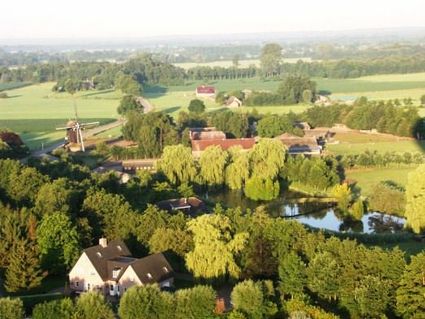
3784 VE Terschuur -
Grote Kerk Vianen (Great Church)
Hubrecht van Vianen founded a chapel in the 13th Century. It fell under the mother church in Hagestein and began growing fast. In the year 1345, it became a parish church and was granted marriage and burial rights. For this, a sum of money had to be paid to the church in Hagestein annually. In the 14th Century, the chapel was replaced by a single-nave church. In the year 1433, following a feud between Vianen and Hagestein, the Bishop of Utrecht decided to split the two churches.
In the mid-15th Century, the church was replaced by a 3-aisle Gothic hall church which is the same size as the current church. (Including the tower, it’s 77.5 metres long, 43 metres wide and 41 metres high.) Since the church also contains the family graves of the Lords of Vianen, it was required to match the grand status of the Brederodes in terms of its size and appearance.
After a fire in the year 1540, the church (de Grote Kerk) was rebuilt in its current form almost immediately (as a combination of a hall church and cruciform church) with the support of Reinoud III van Brederode. The church became Reformed under his son, Hendrik van Brederode. On 25 September 1566, the Roman Catholic institution disappeared and then, on 1 October, the first Protestant service was held.
Discover all monuments in Vianen. Grote kerk Vianen
Voorstraat 110
4132 AT Vianen -
Inundation lock at Wijk bij Duurstede
In 1870, the Kromme Rijn was given a key role in the New Dutch Waterline. Back then, it took almost a month to flood the area around Utrecht. This had to be speeded up. To this end, the river was widened, its bends were straightened and locks and dams were built. Near Wijk bij Duurstede, a large inundation lock was built that made Wijk bij Duurstede the ‘tap’ with which to turn on the New Dutch Waterline. This reduced the time needed to flood the inundation areas to between 4 and 12 days. The inlet is still used daily to transport fresh water to the city of Utrecht and the river Vecht.
Singel 51
3961CH Wijk bij Duurstede -
Landgoed Zuylestein
Landgoed Zuylestein Rijksstraatweg 7
3956 CH Leersum -
Climb the Tower
Climb the Tower Lieve Vrouwekerkhof
3811 BN Amersfoort -
Schaapskooi Heidestein
Schaapskooi Heidestein Prinses Margrietlaan
Zeist -
Brasserie Soesterduinen
Brasserie Soesterduinen Soesterbergsestraat 188
3768 MD Soest -
Fort Uitermeer
Fort Uitermeer Fort Uitermeer
Uitermeer
1381 HP Weesp -
TOP Museum Spakenburg
TOP Museum Spakenburg Oude Schans 47
3752 AH Bunschoten-Spakenburg -
BAK, basis voor actuele kunst
BAK, basis voor actuele kunst Pauwstraat 13A
3512 TG Utrecht -
Castellum Hoge Woerd
Castellum Hoge Woerd Hoge Woerdplein 1
3454 PB De Meern -
TOP De Kuil van Drakensteyn
TOP De Kuil van Drakensteyn Zevenlindeweg 9
3749 AW Lage Vuursche -
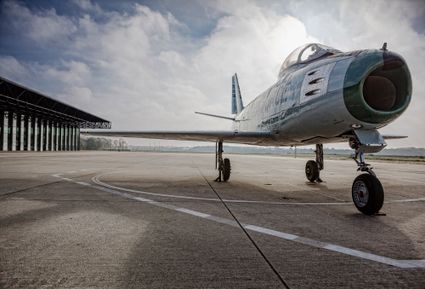
National Military Museum
National Military Museum Verlengde Paltzerweg 1
3768 MX Soest -
Culture Factory
Culture Factory Kees Stipplein 74
3901 TP Veenendaal -
TOP De Schammer
TOP De Schammer Schammersteeg 2
3835 PT Stoutenburg -
Hotel 't Wapen van Harmelen
Hotel 't Wapen van Harmelen Dorpsstraat 14
3481 EK Harmelen -
Asschatterkeerkade
Asschatterkeerkade
The Asschatterkade dates from 1745, and is one of the longest trenches of the Grebbelinie, with its length of 2500 metres. The trench from 1799 lies east of Leusden, at the edge of the flood plain. But there are also elements from more recent history which can be found.
The nine visible military bunkers, for example, were built during the mobilisation between 1939-1940. There is also a unique concrete tank barrier from this time. During the May Days of 1940, the Germans attempted in vain to break through the defences.
Hagenouwselaan 0
3831 JP Leusden